Introduction
Picture this: a bar serves a customer who has clearly had too many drinks — slurred speech, unsteady on his feet, visibly impaired. He leaves, gets behind the wheel, and causes a head-on collision that kills another driver. The drunk driver gets charged. But so does the bar.
That's dram shop liability in action. Under these laws, the establishment that served the alcohol — not just the person who consumed it — can face a lawsuit and devastating financial consequences. A Miami jury demonstrated exactly how serious this exposure can be when it returned a $96 million verdict against the owner of a bar whose patron caused a wrong-way collision.
This guide explains how dram shop laws work, who faces liability, what plaintiffs must prove, how businesses defend themselves, and what practical steps reduce the risk. Whether you own a bar or manage a restaurant, understanding this area of law could be the difference between surviving a claim and losing everything.
Key Takeaways
- Bars, restaurants, and licensed establishments can face legal liability for harm caused by patrons they over-served
- Liability attaches to the business entity, not just the individual employee who poured the drink
- Plaintiffs must prove the patron was visibly intoxicated at the time of service — BAC alone is rarely enough
- Dram shop statutes vary by state in scope, liability standards, and damages caps
- Liquor liability insurance and documented responsible-service practices are your two most critical risk controls
What Are Dram Shop Laws and How Did They Originate?
The term "dram shop" traces to 18th-century English taverns that sold spirits by the "dram," a small unit of liquid measure. Those establishments were called dram shops, and the name stuck, eventually forming the basis of alcohol-seller liability law in the United States.
For much of American legal history, the common-law rule held that selling alcohol created no liability — the reasoning being that drinking causes harm, not selling. That logic left accident victims without recourse against the businesses that enabled a patron's intoxication. Most states eventually rejected it through legislation.
Why These Statutes Exist
Dram shop laws serve two clear policy goals:
- Deterring over-service — imposing financial consequences on establishments that ignore visible signs of intoxication
- Protecting third-party victims — giving innocent people injured by drunk drivers a viable path to compensation beyond suing the driver alone
Today, most U.S. states have some form of dram shop statute. As Cornell Law's Legal Information Institute explains, these laws hold alcohol-serving businesses liable when they serve visibly intoxicated or underage patrons who later cause harm.
State approaches vary significantly. Illinois operates under a statutory model that doesn't require separate proof of negligence. New Jersey expressly requires proof of negligent service. Maryland's highest court declined to recognize a general dram shop cause of action at all in Warr v. JMGM Group. There is no single national standard — state law governs everything.
Commercial Dram Shop vs. Social Host Liability
These two categories of liability are legally distinct:
- Commercial dram shop laws apply to licensed businesses that sell or serve alcohol
- Social host liability laws apply to private individuals who furnish alcohol at non-commercial gatherings
Both can result in legal liability, but the standards differ — and not every state recognizes both.
Who Can Be Held Liable Under Dram Shop Laws?
Commercial Establishments
The primary targets of dram shop claims are licensed alcohol retailers and sellers: bars, restaurants, nightclubs, hotels, event venues, and liquor stores. These businesses carry a legal duty not to serve visibly intoxicated patrons or minors. Breach that duty and they can be held financially responsible for the resulting harm.
Liability flows to the business entity, not just the employee who poured the drink. The business owner's assets and insurance coverage are directly at stake — the bartender's personal liability is a separate, secondary concern.
In Adamy v. Ziriakus, New York's Court of Appeals upheld dram shop liability against the restaurant operator (T.G.I. Friday's), with the jury apportioning 30% fault to the restaurant, 40% to the intoxicated driver, and 30% to the deceased. The business bore real financial consequences for its role.
Social Hosts
Private individuals who host parties or social gatherings face potential liability in many states when they furnish alcohol to a visibly intoxicated guest or an underage drinker who then injures a third party.
Social host liability is less uniform than commercial dram shop liability:
- New York maintains a clear distinction — N.Y. Gen. Oblig. Law § 11-101 covers unlawful sales by commercial sellers, while § 11-100 separately addresses individuals who knowingly furnish alcohol to someone under 21; New York does not create an equivalent claim merely because a visibly intoxicated adult was served by a private host
- New Jersey recognized broader adult social host liability in Kelly v. Gwinnell, holding a host liable for serving a visibly intoxicated adult guest who the host knew would drive
The scope of social host liability requires a state-specific analysis.
What About the Intoxicated Person?
Identifying who served alcohol is only part of the liability picture. The drunk driver or patron is not off the hook. In comparative negligence states, fault is apportioned among all responsible parties — the establishment, the intoxicated individual, and sometimes the injured party themselves. The Adamy case illustrates this precisely: fault was split three ways among the restaurant, the driver, and the decedent.
What Must Be Proven to Establish Dram Shop Liability?
Unlawful Sale or Service
The plaintiff must prove the establishment served alcohol in violation of the law. The most common bases:
- Serving a visibly intoxicated patron (slurred speech, stumbling, loss of coordination, belligerence)
- Serving a minor under the legal drinking age
- Continuing to serve a patron who arrived already intoxicated
This is where many cases hinge. As Justia notes, observable signs like slurred speech, difficulty standing, and loud behavior are the standard markers. Blood alcohol content matters, but BAC alone won't win a dram shop case.
New York's Court of Appeals made this clear in Romano v. Stanley, rejecting an expert opinion based primarily on alcohol-test results because its conclusions about the patron's visible appearance lacked sufficient foundation. Later BAC can support retrograde toxicology analysis, but visible intoxication at the time of service must be established independently.
Causation
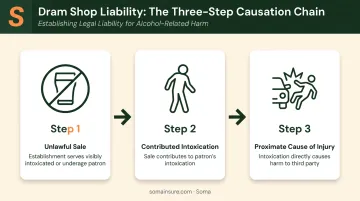
The plaintiff must establish a chain of causation:
- The establishment made an unlawful sale
- That sale contributed to the patron's intoxication
- The intoxication was a proximate cause of the injury
Damages
Causation alone isn't enough. Without measurable harm to a third party — physical injury, medical costs, lost wages, or property damage — a dram shop claim cannot proceed.
Evidence Used in Dram Shop Cases
Attorneys building these cases typically gather:
- Surveillance footage from inside the establishment
- Bar tabs and credit card receipts showing volume and pace of consumption
- Eyewitness testimony from staff, other patrons, or bystanders
- Police reports and BAC results from the incident scene
- Expert toxicologist testimony reconstructing the patron's intoxication level at the time of service
How Businesses Defend Against Dram Shop Claims
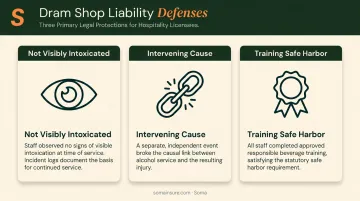
Three defenses appear most frequently in contested dram shop cases:
1. Not Visibly Intoxicated The establishment argues its staff had no observable reason to cut off service — the patron showed no outward signs of impairment at the time of service. This defense succeeded in Romano v. Stanley, where summary judgment was granted to the bar when the plaintiff's visible-intoxication evidence lacked probative force. Contemporaneous documentation — incident logs, service refusal records — strengthens this defense considerably.
2. Intervening Cause The business argues that some separate event broke the causal chain between the alcohol service and the injury. In Patterson v. Thunder Pass, an Arizona court found that taking an intoxicated patron home and separating him from his vehicle ended the tavern's legal duty; when the patron later returned to retrieve his car, that return trip constituted a superseding cause. This defense is highly fact-specific, and simply pointing to the patron's decision to drive is not automatically sufficient.
3. Training Safe Harbor Some states allow an establishment to reduce or avoid liability by demonstrating its staff completed an approved responsible beverage service training program.
Texas provides the clearest example. Texas Alcoholic Beverage Code § 106.14 protects an employer only when it requires all relevant employees to attend a commission-approved program, the employee actually attended, and the employer did not directly or indirectly encourage the violation.
Holding a TIPS or ServSafe certificate alone does not satisfy every element of this defense. Texas was also the only state with a confirmed civil safe harbor in the research underlying this guide.
Practical Steps Businesses Can Take to Reduce Dram Shop Liability
Risk reduction here is operational, not just paperwork. The goal is to build habits and documentation that both prevent incidents and create a defensible record if one occurs anyway.
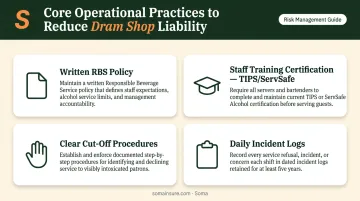
Core Operational Practices
- Written responsible beverage service policy — document it, distribute it, enforce it
- Staff training certification — programs like TIPS (with over 5.7 million participants across 45+ years) and ServSafe Alcohol provide training on recognizing intoxication and refusing service
- Clear cut-off procedures — staff need explicit authority and clear criteria for stopping service
- Daily incident logs — record intoxication events, refusals of service, and related incidents as they happen; TIPS' 2023 guidance specifically recommends this practice
ID Verification
Document age verification consistently. For underage service claims, an establishment that relied in good faith on a convincing fake ID has a stronger defense than one with no verification procedures at all. That defense requires evidence the policy existed and was actually followed.
Liquor Liability Insurance
Even businesses that do everything right can face expensive dram shop claims. Liquor liability insurance — sometimes called dram shop insurance — covers legal defense costs and settlements arising from over-service claims. For bars, restaurants, nightclubs, caterers, and event venues, this coverage is not optional.
Hospitality businesses with elevated risk profiles — late-night venues, high-occupancy nightclubs, establishments with prior claims history — often find that standard insurance markets won't write their coverage. Soma places liquor liability coverage for operations that mainstream brokers turn away, working with specialty carriers including Markel, Nationwide, and Liberty Mutual.
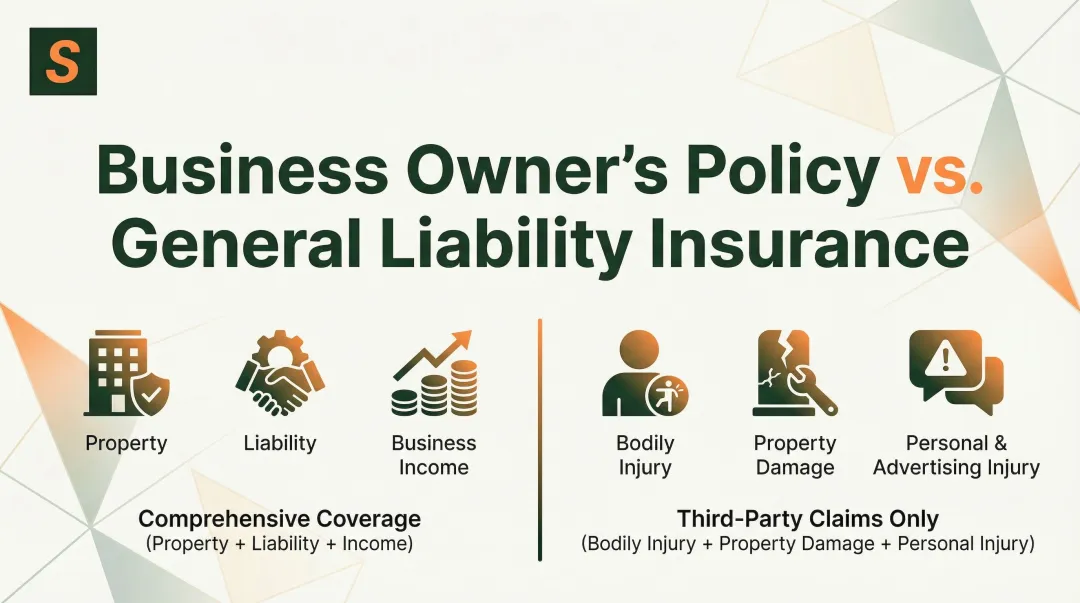
Coverage typically bundles dram shop liability with commercial general liability, property, and business interruption into a single coordinated program, so nothing falls through the cracks between separate policies.
Damages, Deadlines, and Special Rules in Dram Shop Cases
What Plaintiffs Can Recover
Compensatory damages in dram shop cases can include:
- Medical expenses (past and future)
- Lost wages and earning capacity
- Pain and suffering
- Emotional distress
- Property damage
- Disability or disfigurement
Punitive damages may also be available. New York's dram shop statute expressly authorizes "exemplary damages." Maine defines reckless service — intentional service with conscious disregard of an obvious and substantial risk — as a basis for enhanced liability.
Damages Caps by State
While enhanced damages are available in some states, several impose caps that limit total recovery:
| State | Cap |
|---|---|
| Connecticut | Up to $250,000 per injured person |
| Maine | Non-medical losses capped at $350,000 (all claims from one individual) |
| Montana | Noneconomic damages capped at $250,000 per event; punitive damages capped at $250,000 per event |
Filing Deadlines and Notice Requirements
Dram shop cases carry shorter filing deadlines than standard personal injury claims, plus separate notice requirements:
- Connecticut: Written notice to the establishment within 120 days (180 days for death or incapacity); lawsuit must be filed within one year
- Maine: Written notice to all defendants within 180 days; negligent service action within two years
Missing these deadlines permanently bars a claim, regardless of its merits. Consult a licensed attorney in your jurisdiction well before any deadline approaches — state rules vary and exceptions are rare.
Frequently Asked Questions
What is dram shop liability?
Dram shop liability is the legal responsibility of a bar, restaurant, or other alcohol-serving establishment when their patron becomes intoxicated and causes injury or death to another person, based on the establishment's unlawful act of over-serving. The business, not just the driver, can be sued.
What is the dram shop law in New York?
New York's Dram Shop Act (N.Y. Gen. Oblig. Law § 11-101) allows injured parties to sue any seller who unlawfully sold alcohol directly to a visibly intoxicated person. A separate statute (§ 11-100) covers situations where a private individual knowingly furnishes alcohol to someone under 21.
Who can be held liable under dram shop laws?
Licensed commercial establishments (bars, restaurants, liquor stores, hotels, event venues) are the primary defendants. Social hosts (private individuals who serve alcohol at parties) can also face liability in many states, particularly when they serve minors.
What is the difference between dram shop liability and social host liability?
Dram shop liability applies to licensed, commercial alcohol sellers. Social host liability applies to private individuals who serve alcohol at non-commercial gatherings. The legal standards differ between the two, and the scope of social host liability varies significantly by state.
What evidence is used to prove a dram shop claim?
Key evidence includes surveillance footage, bar receipts, eyewitness accounts, police and BAC reports, and expert toxicologist testimony. Together, this evidence establishes that the patron was visibly intoxicated at the time of service and that over-service caused or contributed to the harm.
Does liquor liability insurance cover dram shop claims?
Yes. Liquor liability insurance (also called dram shop insurance) covers claims arising from over-service, including legal defense costs and settlements. Bars, restaurants, and event venues in hard-to-insure categories should confirm adequate coverage is in place before a claim arises.