Introduction
Every year, thousands of business owners walk into insurance offices only to hear the same frustrating answer: "We can't help you." Not because their business is poorly managed or unprofitable, but simply because of the industry they operate in. If you run a construction company, manage a trucking fleet, own a bar, or provide healthcare services, you've likely experienced this firsthand—standard insurance carriers decline your application before you can finish explaining your operations.
Being labeled "high risk" doesn't mean uninsurable. It means you need specialized coverage from carriers who understand your industry's exposures and are willing to underwrite them. This guide covers what high risk business insurance is, which industries require it, what coverage options exist, how pricing works, and how to secure coverage when standard carriers turn you away.
TLDR
- High risk business insurance covers businesses standard carriers decline due to elevated exposure
- Construction, trucking, hospitality, and healthcare are most commonly flagged
- Coverage is placed through the Excess & Surplus (E&S) market, which allows flexible underwriting
- Premiums run higher but can decrease with documented safety programs and the right broker
What Is High Risk Business Insurance?
High risk business insurance is commercial coverage designed for businesses that fall outside standard underwriting guidelines. This isn't a single policy type—it's a category of coverage typically placed through the non-admitted Excess & Surplus (E&S) market when traditional carriers decline.
How the E&S Market Works
Unlike standard admitted carriers that must follow state-regulated rate and form filings, E&S carriers operate with "freedom of rate and form". This freedom lets them write policies for unusual or high-exposure risks that admitted markets won't touch. The U.S. E&S market has exploded in recent years, reaching a record $130.9 billion in direct premiums written in 2024—a 12.3% year-over-year increase.
As standard carriers tighten underwriting standards due to nuclear verdicts and social inflation, more businesses are being pushed into the E&S market — and that trend shows no signs of slowing.
The Trade-Off
While E&S carriers offer flexibility, policyholders face two key differences:
- No state guaranty fund protection if the insurer becomes insolvent
- Surplus lines taxes added to premiums, which vary by state
What Makes a Business High Risk?
Insurers evaluate several core factors when classifying a business as high risk. Understanding these criteria helps you anticipate placement challenges and prepare accordingly.
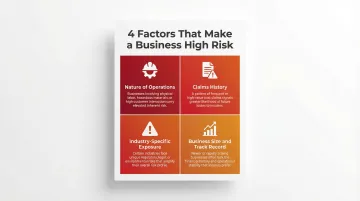
Nature of Operations
The most significant factor is what your business actually does. Businesses involving physical labor, public interaction, heavy machinery, or hazardous materials face immediate scrutiny. A software consulting firm and a roofing contractor may have the same revenue, but their risk profiles differ dramatically.
Claims History
Frequent or severe claims signal to underwriters that future losses are likely — even when those claims were legitimate and properly settled. One large claim can permanently shift you from the standard to non-standard market. Underwriters typically review five years of loss runs when evaluating your application.
Industry-Specific Exposure
Certain activities carry inherently higher liability:
- Serving alcohol (dram shop laws)
- Working at heights
- Transporting freight
- Handling sensitive patient data
- Manufacturing products that could cause bodily harm
Business Size and Track Record
Very new businesses struggle most. Without loss history, underwriters have no data to price the risk — so they default to conservative terms and higher premiums. Established businesses aren't automatically exempt: high revenue paired with weak risk controls draws the same level of scrutiny as a spotty claims record.
Industries That Typically Need High Risk Business Insurance
Some industries land in the high-risk category regardless of how well they're run. For business owners in these sectors, knowing what underwriters look for is the first step toward securing the right coverage.
Construction and Contracting
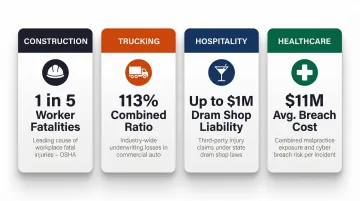
Construction consistently ranks as high risk because workers operate heavy equipment, work at heights, and handle hazardous materials. The industry experienced 1,032 fatal occupational injuries in 2024, with fatal falls, slips, and trips accounting for 370 of those deaths.
One mistake on a large project—a faulty installation across multiple units, for example—can generate catastrophic claims. Risk level also varies significantly by trade: a residential plumber faces very different exposures than a commercial general contractor.
General contractors with strong loss histories are seeing rate stabilization. High-exposure trade contractors like roofers, exterior masons, and steel erectors face severe capacity reductions and must often rely on non-admitted carriers.
Key variables underwriters examine in construction:
- Type of work performed (trade vs. general contracting)
- Loss history over the past 3-5 years
- Whether subcontractors carry their own coverage
- Project size and contract value
Trucking and Transportation
Commercial trucking faces an ongoing profitability crisis. In 2024, commercial auto liability posted a deeply unprofitable 113.0% net combined ratio, driven by nuclear verdicts, social inflation, and rising repair costs for advanced vehicle technology.
Core exposures include:
- Commercial auto liability
- Cargo damage
- Driver safety records
- DOT/FMCSA regulatory compliance
Average marginal insurance costs reached $0.099 per mile in 2023, forcing many fleets to reduce coverage limits or accept higher self-insured retentions. Truckers with poor driver safety records or specialty cargo (hazmat, oversized loads) face the most difficulty securing standard coverage.
Hospitality: Restaurants, Bars, and Nightlife
The hospitality sector faces liability exposure from several angles. Slips, trips, and falls are significantly more expensive than other claim types for restaurants. But the real crisis is liquor liability.
43 states and the District of Columbia enforce dram shop laws, holding businesses liable for serving alcohol to minors or visibly intoxicated persons who subsequently cause injury or death. In South Carolina, insurers lost an average of $1.77 for every $1 of premium earned on liquor liability policies between 2017 and 2022, with combined ratios reaching as high as 290%.
As a result, some venues have seen annual premiums jump from $6,000 to $65,000. Restaurants with specialized equipment like open-flame cooking or smokers face additional property risk.
Healthcare and Medical Services
Medical malpractice exposure, HIPAA compliance risks, and cyber liability all contribute to healthcare being a high-risk category. In 2024, 49.8% of reported medical liability premiums increased from the previous year—a level not seen since the hard market of the early 2000s.
The cyber threat layer compounds that pressure. The 2024 Change Healthcare ransomware breach compromised the records of 192.7 million individuals, marking the largest healthcare data breach in U.S. history. This dual-front exposure affects physicians, clinics, home health aides, and medical spas.
Other High-Risk Industries
Additional industries commonly requiring E&S placement:
- Manufacturing - Machinery operation, product liability
- Cannabis businesses - Regulatory complexity, limited carrier appetite
- Security companies - Liability for protection failures
- Adult entertainment - Premises liability, reputational risk
- Financial services - Errors & omissions exposure
- Technology firms - Data breach and cyber liability
Coverage Options for High Risk Businesses
High risk doesn't mean limited coverage—it means coverage must be more precisely matched to your specific exposure profile. High-risk businesses typically require a layered approach.
| Coverage Type | What It Covers | Why High-Risk Businesses Need It |
|---|---|---|
| General Liability | Third-party injury, property damage, advertising injury | Higher limits required for contracts and lenders |
| Commercial Property + BI | Buildings, equipment, inventory, lost income | Business interruption covers fixed costs during shutdowns |
| Workers' Compensation | Employee injuries and lost wages | Legally required; rates vary significantly by EMR |
| Professional Liability (E&O) | Client harm from advice or services | Essential for healthcare, finance, and tech operators |
| Umbrella / Excess Liability | Extends limits above primary policies | Protects against catastrophic single-event losses |
General Liability
This foundational policy covers third-party bodily injury, property damage, personal injury, and advertising injury. For high-risk businesses, limits are often higher than the standard $1 million per occurrence/$2 million aggregate. Many require $2 million per occurrence and $4 million aggregate to satisfy contract requirements or lender demands.
The policy can also include endorsements specific to your operations. A contractor might add completed operations coverage; a manufacturer typically needs product liability protection built in.
Commercial Property and Business Interruption
Commercial property insurance covers buildings, equipment, and inventory. But for high-risk operations, business interruption coverage is critical—if a claim shuts down your location, you still have payroll and fixed costs to cover.
High-risk operations often need agreed value coverage rather than actual cash value (ACV). Agreed value suspends the standard coinsurance clause and guarantees the insurer will pay up to the pre-determined limit without applying depreciation. This prevents being underinsured after a major loss.
Workers' Compensation
Workers' comp is legally required in most states for businesses with employees. High-risk industries like construction, trucking, and manufacturing face much higher base rates due to elevated workplace injury risk.
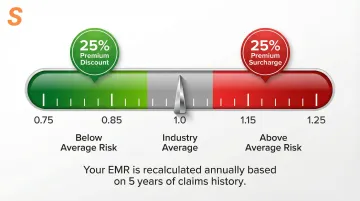
Your Experience Modification Rate (EMR or X-mod) is what moves that number over time. An EMR of 1.0 represents the industry average. Drop to 0.75 with a strong safety record and you get a 25% premium discount; climb to 1.25 and you pay a 25% surcharge.
Professional Liability and Specialty Coverages
Service-based high-risk businesses need professional liability (E&O) coverage. Healthcare providers, financial advisors, and tech consultants face significant exposure if their advice or services cause client harm.
Industry-specific endorsements include:
- Liquor liability for bars and restaurants
- Cyber liability for any business handling customer data
- Product liability for manufacturers
- Hired/non-owned auto for businesses using personal vehicles for work
Umbrella and Excess Liability
Umbrella and excess liability policies extend limits above primary policies—critical for high-risk businesses where a single catastrophic event can exceed standard policy limits. Upgrading to a $5 million umbrella policy typically adds 10% to 15% of the underlying policy premium.
Most high-risk businesses benefit more from an umbrella policy than a straight excess policy. Umbrella policies can fill gaps in underlying coverage; excess policies simply stack more limits on top of whatever the underlying policy already covers.
How Much Does High Risk Business Insurance Cost and How to Lower It?
Costs vary by industry, risk profile, coverage type, and claims history. High-risk businesses can pay 2-5x the premiums of similar low-risk operations.
Premium Benchmarks by Industry:
| Industry | Annual Premium Range | Key Cost Drivers |
|---|---|---|
| Small Business GL ($1M/$2M) | $400 - $900 | Payroll, revenue, NAICS code |
| Contractor GL (Painters) | $450 - $850 | Trade risk, state labor laws |
| Contractor GL (Roofers) | $1,200+ | Height exposure, claims history |
| Commercial Trucking | $0.099 per mile | Operating radius, cargo type, driver records |
| Hospitality Liquor Liability | $6,000 - $65,000+ | Alcohol sales %, state dram shop laws |
Factors Underwriters Use to Price High-Risk Policies:
- Annual revenue and payroll
- Number of employees
- Geographic operating area
- Specific operations performed
- Safety program documentation
- Loss runs (5 years of claims history)
Strategies to Reduce Premiums Over Time:
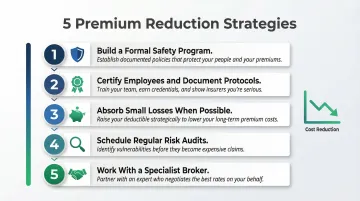
- Build and document a formal safety program. Insurer-supported engineering controls reduced workers' compensation claim frequency by 66% in one joint study. Ongoing safety training typically cuts claims frequency and severity by 5-10%.
- Certify employees and document protocols. Equipment certifications and written procedures show underwriters you're managing risk proactively—not reactively.
- Absorb small losses when you can. Filing minor claims raises your loss runs, which follow your business for five years and directly inflate renewal premiums.
- Schedule regular risk audits. Carriers reward businesses that find and fix hazards before they become claims. This pays off at renewal.
- Work with a broker who specializes in high-risk placements. A standard broker accesses 3-5 carriers. Soma works with hundreds of carrier partners—including Chubb, Markel, Kinsale, Liberty Mutual, and Nationwide—giving you access to markets that standard brokers simply can't reach.
Frequently Asked Questions
What is high risk business insurance?
High risk business insurance is commercial coverage for businesses with elevated risk profiles that standard carriers decline, typically placed through the Excess & Surplus (E&S) lines market where underwriters have greater flexibility to customize policies for unusual exposures.
What businesses are considered high risk?
The most common high-risk categories include construction, trucking/transportation, hospitality (bars/restaurants), healthcare, manufacturing, cannabis, security companies, and businesses with a history of frequent claims or prior policy cancellations.
What is the best insurance for high-risk businesses?
High-risk businesses typically need a customized combination of general liability, workers' comp, commercial auto, and specialty endorsements. The right mix depends on your industry—and requires carriers that specialize in your specific exposure, not standard market generalists.
Which insurance companies cover high-risk businesses?
E&S carriers like Kinsale, Markel, and others specialize in high-risk placements. Working with a broker who has broad access to both admitted and non-admitted markets is the most effective way to find coverage.
How much does a $1,000,000 general liability insurance policy cost?
Standard businesses pay $400–$1,500 annually. High-risk businesses typically pay two to five times more, depending on industry, claims history, and operations—get a quote specific to your risk profile.
What kind of insurance does a small business or LLC need?
Most small businesses need general liability and workers' compensation (if they have employees). LLCs in high-risk industries typically need commercial property, professional liability, and industry-specific coverages on top of that baseline.